
Contents
- 🌌 Introduction to Nihilism
- 📚 Historical Roots of Nihilism
- 💡 Key Concepts in Nihilism
- 👥 Influential Nihilist Thinkers
- 📝 Nihilism in Literature and Art
- 🎨 Existentialism and Nihilism
- 🤝 Criticisms and Controversies
- 🌐 Nihilism in Modern Society
- 📊 The Psychology of Nihilism
- 👀 Nihilism and Morality
- 🚀 The Future of Nihilism
- Frequently Asked Questions
- Related Topics
Overview
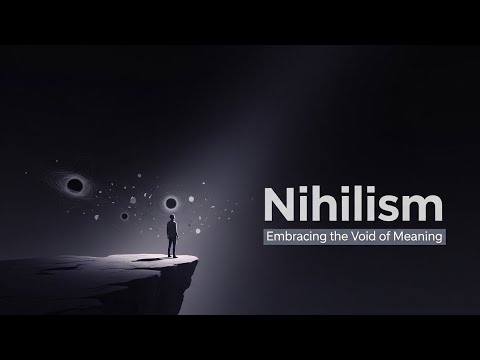
Nihilism, a term coined by German philosopher Friedrich Nietzsche in the 19th century, refers to the belief that life has no inherent meaning or value. This philosophy argues that traditional morality, religion, and social norms are baseless and that we must create our own meaning in a seemingly meaningless world. With a vibe score of 6, nihilism is a highly debated and controversial topic, with some viewing it as a liberating force and others as a destructive ideology. The concept has been influenced by various thinkers, including Arthur Schopenhauer and Jean-Paul Sartre, and has been linked to existentialism and postmodernism. Nihilism has also been associated with the works of artists and writers such as Albert Camus and Emil Cioran, who explored the human condition in the face of absurdity and uncertainty. As we move forward, the question remains: can we find meaning in a world that may be inherently meaningless, and what are the implications of embracing or rejecting nihilism?
🌌 Introduction to Nihilism
Nihilism is a philosophical concept that has been debated and explored by scholars, philosophers, and artists for centuries. At its core, nihilism is the idea that life has no inherent meaning or value. This concept is often associated with the works of Friedrich Nietzsche, who argued that the death of God had led to a crisis of meaning in modern society. Nihilism can be seen as a response to the existentialist notion that human beings must create their own meaning in life. However, nihilists argue that this is impossible, and that all values and beliefs are ultimately baseless. For more information on existentialism, see Existentialism.
📚 Historical Roots of Nihilism
The historical roots of nihilism can be traced back to ancient Greece, where philosophers such as Aristotle and Epicurus grappled with the concept of meaning and purpose. However, it was not until the 19th century that nihilism emerged as a distinct philosophical movement. The works of Soren Kierkegaard and Friedrich Nietzsche were particularly influential in shaping the concept of nihilism. Kierkegaard's idea of the absurd and Nietzsche's concept of the will to power are still widely debated today. For more information on Kierkegaard, see Soren Kierkegaard.
💡 Key Concepts in Nihilism
There are several key concepts in nihilism that are worth exploring. One of the most important is the idea of the void, which refers to the absence of meaning or purpose in life. Nihilists argue that this void is inherent to human existence, and that all attempts to fill it with values or beliefs are ultimately futile. Another key concept is the idea of perspectivism, which holds that all knowledge and truth is relative and subjective. This idea is often associated with the works of Friedrich Nietzsche. For more information on perspectivism, see Perspectivism.
👥 Influential Nihilist Thinkers
There have been many influential nihilist thinkers throughout history. One of the most famous is Friedrich Nietzsche, who argued that the death of God had led to a crisis of meaning in modern society. Another influential thinker is Emile Cioran, who wrote extensively on the topic of nihilism and its relationship to human existence. Other notable nihilist thinkers include Arthur Schopenhauer and Soren Kierkegaard. For more information on Emile Cioran, see Emile Cioran.
📝 Nihilism in Literature and Art
Nihilism has had a significant influence on literature and art. Many authors and artists have explored the concept of nihilism in their work, often using it as a way to critique modern society and the values that underpin it. One example is the novel Thus Spoke Zarathustra by Friedrich Nietzsche, which explores the idea of the Ubermensch and the will to power. Another example is the novel Crime and Punishment by Fyodor Dostoevsky, which explores the psychological effects of nihilism on the human psyche. For more information on Thus Spoke Zarathustra, see Thus Spoke Zarathustra.
🎨 Existentialism and Nihilism
Existentialism and nihilism are often seen as closely related concepts. Both philosophies grapple with the idea of meaning and purpose in life, and both argue that human beings must take responsibility for creating their own values and beliefs. However, existentialism is often seen as a more optimistic philosophy, as it argues that human beings have the freedom to choose their own path in life and create their own meaning. Nihilism, on the other hand, is often seen as a more pessimistic philosophy, as it argues that all values and beliefs are ultimately baseless and that life has no inherent meaning. For more information on existentialism, see Existentialism.
🤝 Criticisms and Controversies
Nihilism has been the subject of much criticism and controversy over the years. Some critics argue that nihilism is a destructive and pessimistic philosophy that undermines the values and beliefs that underpin modern society. Others argue that nihilism is a necessary response to the absurdity and uncertainty of human existence. One of the most famous criticisms of nihilism is the idea that it leads to a kind of moral relativism, where all values and beliefs are seen as equally valid. For more information on moral relativism, see Moral Relativism.
🌐 Nihilism in Modern Society
Nihilism continues to be a relevant and influential philosophy in modern society. Many people today are struggling to find meaning and purpose in their lives, and nihilism offers a unique perspective on this problem. However, nihilism is not without its challenges and criticisms. Some argue that nihilism is a form of cynicism that undermines the values and beliefs that underpin modern society. Others argue that nihilism is a necessary response to the postmodern condition, where all values and beliefs are seen as relative and subjective. For more information on postmodernism, see Postmodernism.
📊 The Psychology of Nihilism
The psychology of nihilism is a complex and multifaceted topic. Some psychologists argue that nihilism is a form of depression or anxiety, where the individual feels a sense of hopelessness and despair. Others argue that nihilism is a form of personality disorder, where the individual has a distorted view of reality and a lack of empathy for others. However, nihilism can also be seen as a form of liberation, where the individual is free to create their own values and beliefs without the constraints of traditional morality. For more information on depression, see Depression.
👀 Nihilism and Morality
Nihilism has significant implications for morality and ethics. If life has no inherent meaning or value, then what is the basis for moral principles and values? Some nihilists argue that morality is simply a form of social contract, where individuals agree to follow certain rules and norms in order to maintain social order. Others argue that morality is a form of emotivism, where moral principles are based on emotions and personal preferences rather than reason or objective truth. For more information on social contract, see Social Contract.
🚀 The Future of Nihilism
The future of nihilism is uncertain and contested. Some argue that nihilism will continue to be a relevant and influential philosophy in the 21st century, as people struggle to find meaning and purpose in a rapidly changing world. Others argue that nihilism will eventually give way to new forms of humanism and transhumanism, where human beings will create new values and beliefs based on technological advancements and scientific discoveries. However, one thing is certain: nihilism will continue to be a provocative and challenging philosophy that pushes us to question our assumptions about the nature of reality and human existence. For more information on humanism, see Humanism.
Key Facts
- Year
- 1862
- Origin
- Germany
- Category
- Philosophy
- Type
- Philosophical Concept
- Format
- what-is
Frequently Asked Questions
What is nihilism?
Nihilism is a philosophical concept that argues that life has no inherent meaning or value. It is often associated with the works of Friedrich Nietzsche, who argued that the death of God had led to a crisis of meaning in modern society. Nihilism can be seen as a response to the existentialist notion that human beings must create their own meaning in life. However, nihilists argue that this is impossible, and that all values and beliefs are ultimately baseless. For more information on existentialism, see Existentialism.
Who are some influential nihilist thinkers?
Some influential nihilist thinkers include Friedrich Nietzsche, Emile Cioran, Arthur Schopenhauer, and Soren Kierkegaard. These thinkers have all contributed to the development of nihilist philosophy, and their works continue to be widely read and debated today. For more information on Emile Cioran, see Emile Cioran.
What is the relationship between nihilism and existentialism?
Nihilism and existentialism are often seen as closely related concepts. Both philosophies grapple with the idea of meaning and purpose in life, and both argue that human beings must take responsibility for creating their own values and beliefs. However, existentialism is often seen as a more optimistic philosophy, as it argues that human beings have the freedom to choose their own path in life and create their own meaning. Nihilism, on the other hand, is often seen as a more pessimistic philosophy, as it argues that all values and beliefs are ultimately baseless and that life has no inherent meaning. For more information on existentialism, see Existentialism.
What are some criticisms of nihilism?
Some criticisms of nihilism include the idea that it leads to a kind of moral relativism, where all values and beliefs are seen as equally valid. Others argue that nihilism is a form of cynicism that undermines the values and beliefs that underpin modern society. However, nihilism can also be seen as a necessary response to the absurdity and uncertainty of human existence. For more information on moral relativism, see Moral Relativism.
What is the future of nihilism?
The future of nihilism is uncertain and contested. Some argue that nihilism will continue to be a relevant and influential philosophy in the 21st century, as people struggle to find meaning and purpose in a rapidly changing world. Others argue that nihilism will eventually give way to new forms of humanism and transhumanism, where human beings will create new values and beliefs based on technological advancements and scientific discoveries. For more information on humanism, see Humanism.
How does nihilism relate to psychology?
The psychology of nihilism is a complex and multifaceted topic. Some psychologists argue that nihilism is a form of depression or anxiety, where the individual feels a sense of hopelessness and despair. Others argue that nihilism is a form of personality disorder, where the individual has a distorted view of reality and a lack of empathy for others. However, nihilism can also be seen as a form of liberation, where the individual is free to create their own values and beliefs without the constraints of traditional morality. For more information on depression, see Depression.
What is the relationship between nihilism and morality?
Nihilism has significant implications for morality and ethics. If life has no inherent meaning or value, then what is the basis for moral principles and values? Some nihilists argue that morality is simply a form of social contract, where individuals agree to follow certain rules and norms in order to maintain social order. Others argue that morality is a form of emotivism, where moral principles are based on emotions and personal preferences rather than reason or objective truth. For more information on social contract, see Social Contract.