
Contents
- 📊 Introduction to Business Continuity Plan
- 🌪️ Understanding Business Continuity
- 📈 Benefits of Business Continuity Planning
- 🚨 Identifying Potential Threats
- 📝 Creating a Business Continuity Plan
- 🚀 Implementing and Testing the Plan
- 📊 Maintaining and Reviewing the Plan
- 🤝 Stakeholder Engagement and Communication
- 📊 Measuring Business Continuity Plan Effectiveness
- 🌐 Global Best Practices and Standards
- 📚 Case Studies and Examples
- 🔮 Future of Business Continuity Planning
- Frequently Asked Questions
- Related Topics
Overview
A business continuity plan (BCP) is a comprehensive framework designed to help organizations respond to and recover from potential disruptions, such as natural disasters, cyber attacks, or supply chain failures. According to a study by the Business Continuity Institute, 71% of organizations have experienced at least one disruption in the past year, with 45% of these disruptions having a significant impact on business operations. A well-crafted BCP can mitigate the effects of such disruptions, minimizing downtime and ensuring the continuity of critical business functions. The plan typically includes a risk assessment, business impact analysis, and strategies for emergency response, crisis management, and recovery. For instance, a company like IBM has a robust BCP in place, which includes a global crisis management team and a network of backup data centers. As the threat landscape continues to evolve, the importance of having a robust BCP in place will only continue to grow, with the global business continuity management market expected to reach $1.3 billion by 2025, growing at a CAGR of 12.5%. The development of a BCP involves a range of stakeholders, including business leaders, IT professionals, and risk managers, and requires a deep understanding of the organization's operations, dependencies, and vulnerabilities. By prioritizing business continuity, organizations can protect their reputation, revenue, and customers, and ensure their long-term survival and success.
📊 Introduction to Business Continuity Plan
A well-structured Business Continuity Plan is essential for any organization to ensure its survival and continued operation in the face of disruptions. Business continuity may be defined as the capability of an organization to continue the delivery of products or services at pre-defined acceptable levels following a disruptive incident. The goal of business continuity planning is to enable ongoing operations before and during execution of Disaster Recovery. This is achieved by creating systems of prevention and recovery to deal with potential threats to a company, as outlined in the Risk Management framework. Effective business continuity planning requires a thorough understanding of the organization's Risk Assessment and Business Impact Analysis.
🌪️ Understanding Business Continuity
Business continuity is the intended outcome of proper execution of both business continuity planning and disaster recovery. It involves a holistic approach to managing risks and ensuring that an organization can respond to and recover from disruptions. This includes identifying potential Threats and Vulnerabilities, as well as developing strategies to mitigate and manage them. A business continuity plan should be aligned with the organization's overall Strategic Planning and Operational Planning goals. By understanding the importance of business continuity, organizations can take proactive steps to ensure their continued operation and success, as outlined in the Business Continuity Management standard.
📈 Benefits of Business Continuity Planning
The benefits of business continuity planning are numerous and well-documented. By having a plan in place, organizations can minimize the impact of disruptions, reduce downtime, and ensure continued operation. This, in turn, can lead to increased Customer Satisfaction, improved Reputation, and enhanced Competitive Advantage. A business continuity plan can also help organizations to identify and mitigate potential Risks and Threats, as well as develop strategies to manage and respond to them. Furthermore, a plan can facilitate Compliance with regulatory requirements and industry standards, such as ISO 22301. By investing in business continuity planning, organizations can ensure their long-term survival and success, as outlined in the Business Continuity Institute guidelines.
🚨 Identifying Potential Threats
Identifying potential threats is a critical component of business continuity planning. This involves conducting a thorough Risk Assessment to identify potential disruptions, such as natural disasters, cyber attacks, and supply chain disruptions. Organizations should also consider the potential impact of these threats on their operations, as well as the likelihood and potential consequences of their occurrence. By understanding the potential threats and vulnerabilities, organizations can develop strategies to mitigate and manage them, as outlined in the Threat Assessment framework. This may involve implementing Controls and Mitigations, such as backup systems, redundant infrastructure, and disaster recovery plans. Effective threat identification and mitigation require a thorough understanding of the organization's Operational Risk and Strategic Risk.
📝 Creating a Business Continuity Plan
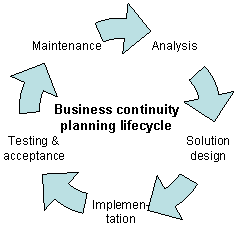
Creating a business continuity plan involves several key steps, including conducting a Business Impact Analysis, identifying critical functions and processes, and developing strategies to maintain operations during disruptions. The plan should be tailored to the organization's specific needs and requirements, as outlined in the Business Continuity Plan Template. It should also be regularly reviewed and updated to ensure that it remains relevant and effective. A business continuity plan should include procedures for Emergency Response, Crisis Management, and Disaster Recovery, as well as guidelines for Communication and Stakeholder Engagement. By following a structured approach to plan development, organizations can ensure that their plan is comprehensive, effective, and aligned with their overall Risk Management strategy.
🚀 Implementing and Testing the Plan
Implementing and testing a business continuity plan is critical to ensuring its effectiveness. This involves training personnel, conducting regular Exercises and Drills, and reviewing the plan to identify areas for improvement. Organizations should also establish Metrics and Key Performance Indicators to measure the plan's effectiveness and identify areas for improvement. By testing the plan, organizations can ensure that it is workable, effective, and aligned with their overall Business Continuity Management goals. This may involve conducting Tabletop Exercises, Simulation Exercises, or Full-Scale Exercises. Effective implementation and testing require a thorough understanding of the organization's Operational Readiness and Response Capability.
📊 Maintaining and Reviewing the Plan
Maintaining and reviewing a business continuity plan is essential to ensuring its continued effectiveness. This involves regularly reviewing the plan to identify areas for improvement, updating the plan to reflect changes in the organization or its operations, and ensuring that the plan remains aligned with the organization's overall Strategic Planning and Operational Planning goals. Organizations should also establish a Maintenance Schedule to ensure that the plan is regularly reviewed and updated. By maintaining and reviewing the plan, organizations can ensure that it remains relevant, effective, and aligned with their overall Risk Management strategy. This may involve conducting regular Reviews, Audits, or Assessments to evaluate the plan's effectiveness and identify areas for improvement.
🤝 Stakeholder Engagement and Communication
Stakeholder engagement and communication are critical components of business continuity planning. This involves identifying key stakeholders, such as employees, customers, and suppliers, and developing strategies to communicate with them during disruptions. Organizations should also establish Communication Plans to ensure that stakeholders are informed and updated during disruptions. By engaging with stakeholders and communicating effectively, organizations can build trust, maintain relationships, and ensure continued operation. Effective stakeholder engagement and communication require a thorough understanding of the organization's Stakeholder Management and Crisis Communication strategies. This may involve developing Communication Protocols, Notification Procedures, or Stakeholder Engagement Plans.
📊 Measuring Business Continuity Plan Effectiveness
Measuring the effectiveness of a business continuity plan is essential to ensuring its continued effectiveness. This involves establishing Metrics and Key Performance Indicators to measure the plan's effectiveness, as well as conducting regular Reviews and Assessments to evaluate the plan's effectiveness. Organizations should also establish a Continuous Improvement process to identify areas for improvement and implement changes to the plan. By measuring the plan's effectiveness, organizations can ensure that it remains relevant, effective, and aligned with their overall Risk Management strategy. This may involve tracking Key Performance Indicators, such as RTO and RPO, or conducting regular Exercises and Drills to test the plan's effectiveness.
🌐 Global Best Practices and Standards
Global best practices and standards for business continuity planning are well-established and widely recognized. These include ISO 22301, NFPA 1600, and BS 25999. Organizations should follow these standards and best practices to ensure that their business continuity plan is comprehensive, effective, and aligned with their overall Risk Management strategy. By following global best practices and standards, organizations can ensure that their plan is workable, effective, and aligned with their overall Business Continuity Management goals. This may involve conducting regular Audits or Assessments to evaluate the plan's compliance with these standards.
📚 Case Studies and Examples
Case studies and examples of business continuity planning are numerous and well-documented. These include examples of organizations that have successfully implemented business continuity plans, as well as those that have failed to do so. By studying these case studies and examples, organizations can learn from the experiences of others and develop their own business continuity plans. This may involve conducting Research or Benchmarking to identify best practices and areas for improvement. Effective case studies and examples require a thorough understanding of the organization's Operational Risk and Strategic Risk.
🔮 Future of Business Continuity Planning
The future of business continuity planning is likely to be shaped by emerging trends and technologies, such as Cloud Computing, Artificial Intelligence, and Internet of Things. Organizations should stay up-to-date with these trends and technologies to ensure that their business continuity plan remains relevant, effective, and aligned with their overall Risk Management strategy. By embracing emerging trends and technologies, organizations can enhance their business continuity capabilities and ensure continued operation. This may involve investing in Research and Development or Innovation to stay ahead of the curve.
Key Facts
- Year
- 2022
- Origin
- ISO 22301:2019
- Category
- Risk Management
- Type
- Concept
Frequently Asked Questions
What is business continuity planning?
Business continuity planning is the process of creating systems of prevention and recovery to deal with potential threats to a company. It involves a holistic approach to managing risks and ensuring that an organization can respond to and recover from disruptions. This includes identifying potential threats and vulnerabilities, as well as developing strategies to mitigate and manage them. A business continuity plan should be aligned with the organization's overall strategic planning and operational planning goals.
Why is business continuity planning important?
Business continuity planning is important because it enables organizations to minimize the impact of disruptions, reduce downtime, and ensure continued operation. This, in turn, can lead to increased customer satisfaction, improved reputation, and enhanced competitive advantage. A business continuity plan can also help organizations to identify and mitigate potential risks and threats, as well as develop strategies to manage and respond to them.
What are the key components of a business continuity plan?
The key components of a business continuity plan include a business impact analysis, risk assessment, and strategies for mitigating and managing risks. The plan should also include procedures for emergency response, crisis management, and disaster recovery, as well as guidelines for communication and stakeholder engagement. A business continuity plan should be tailored to the organization's specific needs and requirements, and should be regularly reviewed and updated to ensure that it remains relevant and effective.
How often should a business continuity plan be reviewed and updated?
A business continuity plan should be regularly reviewed and updated to ensure that it remains relevant and effective. This may involve conducting regular reviews, audits, or assessments to evaluate the plan's effectiveness and identify areas for improvement. The plan should be updated at least annually, or more frequently if there are significant changes to the organization or its operations.
What are the benefits of business continuity planning?
The benefits of business continuity planning include minimizing the impact of disruptions, reducing downtime, and ensuring continued operation. This, in turn, can lead to increased customer satisfaction, improved reputation, and enhanced competitive advantage. A business continuity plan can also help organizations to identify and mitigate potential risks and threats, as well as develop strategies to manage and respond to them.
How can organizations measure the effectiveness of their business continuity plan?
Organizations can measure the effectiveness of their business continuity plan by establishing metrics and key performance indicators to measure the plan's effectiveness. This may involve tracking key performance indicators, such as recovery time objective and recovery point objective, or conducting regular exercises and drills to test the plan's effectiveness. The plan's effectiveness should be evaluated regularly, and updates should be made as necessary to ensure that the plan remains relevant and effective.
What are the global best practices and standards for business continuity planning?
The global best practices and standards for business continuity planning include ISO 22301, NFPA 1600, and BS 25999. Organizations should follow these standards and best practices to ensure that their business continuity plan is comprehensive, effective, and aligned with their overall risk management strategy.